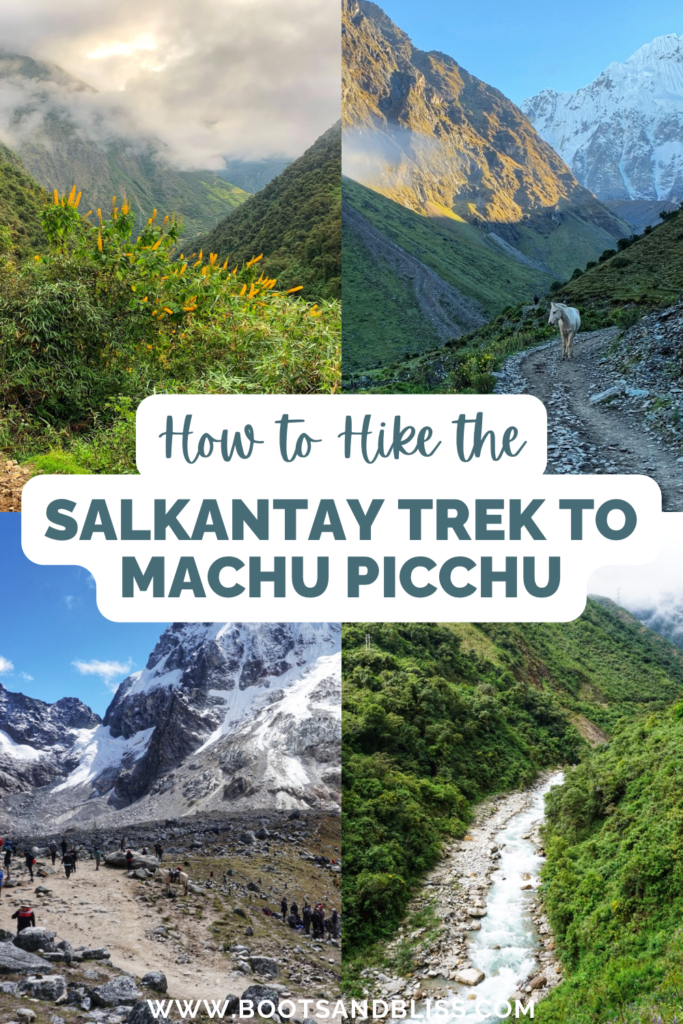
How to Hike the Salkantay Trek to Machu Picchu
This guide will help with planning and undertaking the Salkantay Trek to Machu Picchu. Get ready to lace up your hiking boots for an unforgettable journey to Machu Picchu on the Salkantay Trek.
In the indigenous language of Peru, Quechua, the name Salkantay means “savage mountain.” With such a strong name, it’s no wonder why the Salkantay Trek is renowned for its challenging terrain and stunning landscapes.
As you navigate through the high altitude trail, dense cloud forests, and remote villages, you’ll begin to understand why the locals consider the Salkantay mountain sacred.
Why Choose the Salkantay Trek
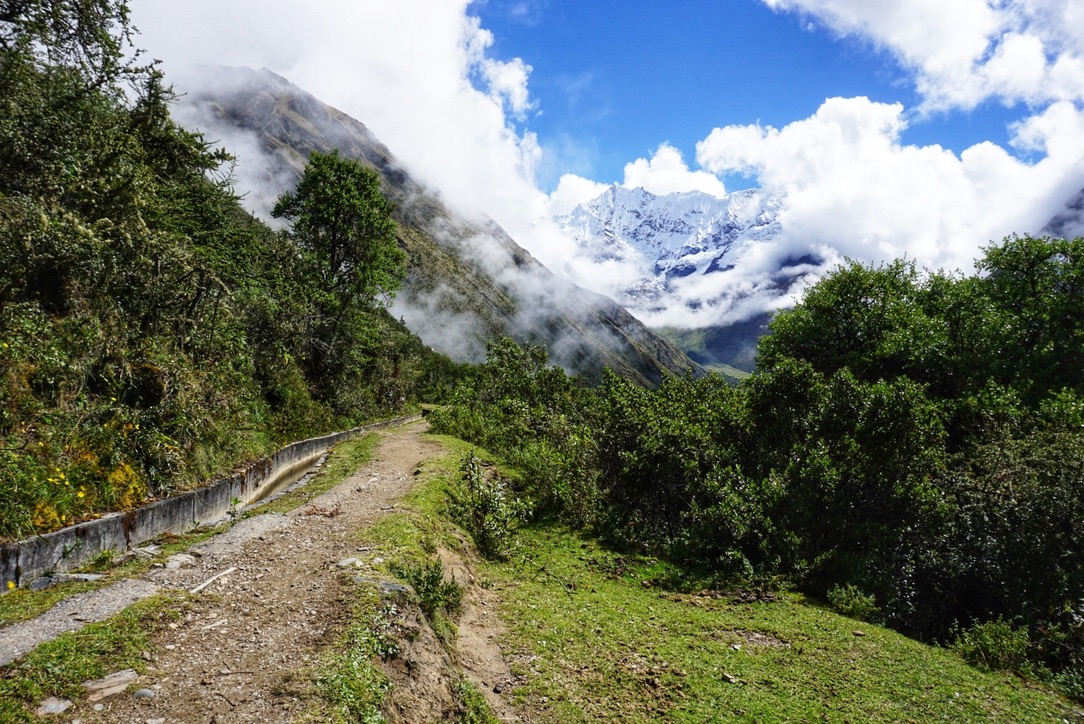
One of the best ways to visit Machu Picchu is through a trek! Known as the best alternative route to Machu Picchu, the Salkantay Trek offers a unique and challenging journey for those seeking an adventure off the beaten path.
The trek takes a scenic route to the beautiful Laguna Humantay, over the Salkantay mountain pass, and through a cloud forest before reaching Aguas Calientes and ending with a tour of Machu Picchu.
The Salkantay Trek may not have the historical significance as the Inca Trail, but the views throughout the trek are incredible. Each day is a new adventure with constantly changing landscapes showcasing the beautiful country of Peru.
Less Foot Traffic
We chose the Salkantay Trek because it is more remote and less busy than the traditional Inca Trail. It was a tough decision to skip the iconic Inca Trail for an alternative route, but I’m happy with the experience.
Personally, I enjoy the solitude of nature and usually prefer the less busy trails when hiking. Although we were in a group, the trail provided a calming stillness that we shared together.
No Stairs
If you have bad knees or pain with going down stairs, I would recommend avoiding the classic Inca Trail which has thousands of original Inca stone stairs.
The Salkantay Trek is by no means easy on the knees, but walking downhill on a trail causes less impact on the knee joints compared to steep downhill stairs. This was a big factor in my decision as well.
Laguna Humantay
Laguna Humantay was high on my list of must see places in Peru. When I saw that it was on the itinerary of the Salkantay Trek it made the decision much easier. Combining two must see sites in one itinerary made perfect sense and is another reason why I chose to do the Salkantay trek instead of the Inca Trail.
Because We Love a Challenge
The Salkantay Trek is considered more challenging than the Inca Trail because it covers more miles and climbs to a high altitude. The classic Salkantay Trek takes 5 days/4 nights and is approximately 47 miles and 15,901 feet above sea level at its highest point.
If you are up for a challenge and want a less busy trail with spectacular views culminating with visiting Machu Picchu, the Salkantay Trek is for you!
Planning Your Salkantay Trek Adventure
Best Time to Visit: Dry Season
The ideal time to complete the trek is during Peru’s dry season, May to October. Dry season is not without rain, it just means less.
Shoulder season is also an option. The months of April and November offer generally pleasant temperatures with minimal precipitation.
Peak Season
The peak travel months in Peru are July-August. This is considered winter time in Peru, you can expect sunny days and cold nights on the trail.
During these months there will more visitors throughout Peru which means more hikers on the trails. Increased tourism also causes more demand for accommodations. It is recommended to make reservations for treks and hotels approximately 3 months in advance if you are traveling during peak season.
Rainy Season
Peru’s rainy season lasts from December to March. January and February are known to be the wettest months. In fact, the Inca Trail is closed the entire month of February for this reason.
If you are traveling to Peru during the rainy season, the Salkantay Trek is available to hike, but you will need to be prepared for unpredictable weather and rain.
Booking Options: Tour Agencies or Self-Guided
My experience using a tour company for the Salkantay Trek was better than expected. Considering this was my first long distance trek, I’m glad I went with a tour guide. Having a guide was invaluable. I felt at ease knowing I had a professional looking out for me, especially while hiking in high altitude. All I had to do was hike and all of the logistics were handled.
After a long day on the trail, it was so convenient to not have to worry about setting up camp or cooking. I find joy in the whole process of being self sufficient during camping trips, but this felt like a special occasion where I could focus on enjoying the journey.
On the subject, let’s talk about the camp food. It was incredible! The chefs did such a good job serving up multi course meals that were satisfying and delicious. Way better than standard backpacking food!
If this is your first time on a multi day trek, I highly recommend booking with a tour operator. If you are an experienced backpacker, you can definitely plan it out on your own, but it’s such a luxury to let someone else handle all the details.
Training and Preparation
Physical Fitness Requirements
The Salkantay trail is a challenging hike. 47 miles plus altitude is not a walk in the park. However, I think the trail is accessible to everyone who is willing to physically prepare. In order to have the best experience possible, you should plan to train and properly prep for the hike.
A few things that I did to prepare include incline walking, stretching to help prevent injuries, and foam rolling. Also, it’s helpful to start getting used to carrying the weight of a backpack. Your backpack fit should be supportive and comfortable.
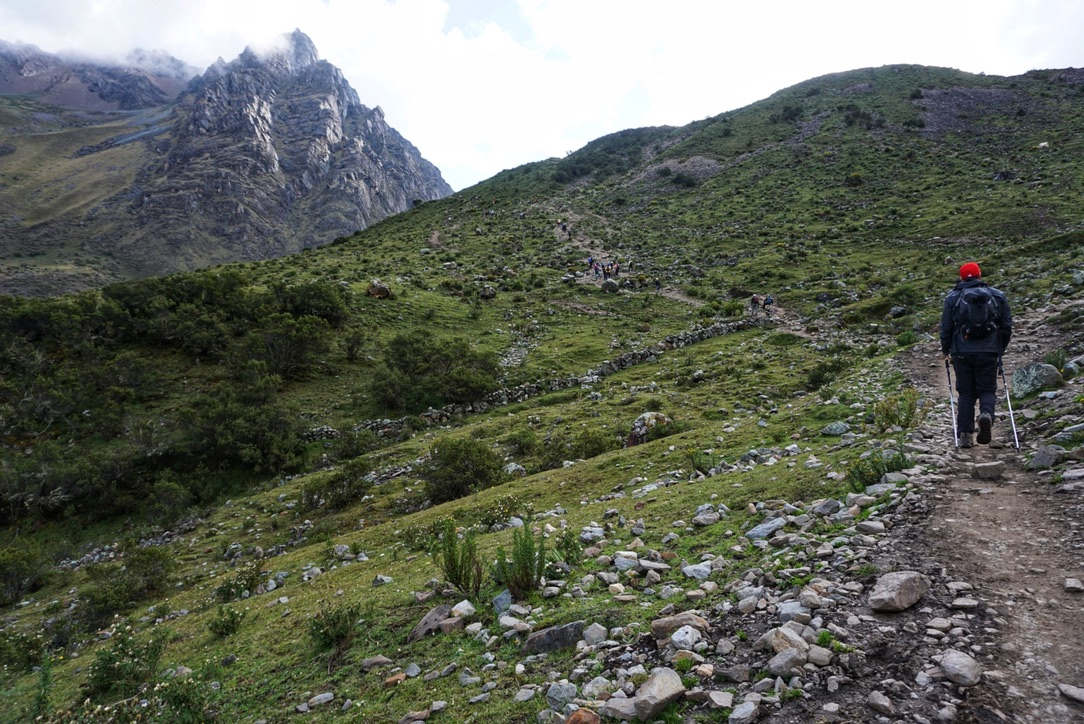
The terrain varies throughout the trek. There will be some steep ascents/descents and rocky terrain. The downhill sections can be challenging for the knees. I highly recommend brining trekking poles to help offload the pressure on your knee joints. The poles also help with muscle fatigue!
Most importantly, a positive attitude always helps on while on trail.
Packing Essentials: Gear for the Trek
Strategic packing is important because you don’t want to be burdened with an overweight bag. You are limited to what you can pack for the Salktantay trek because the tour companies utilize horses to carry gear from camp to camp.
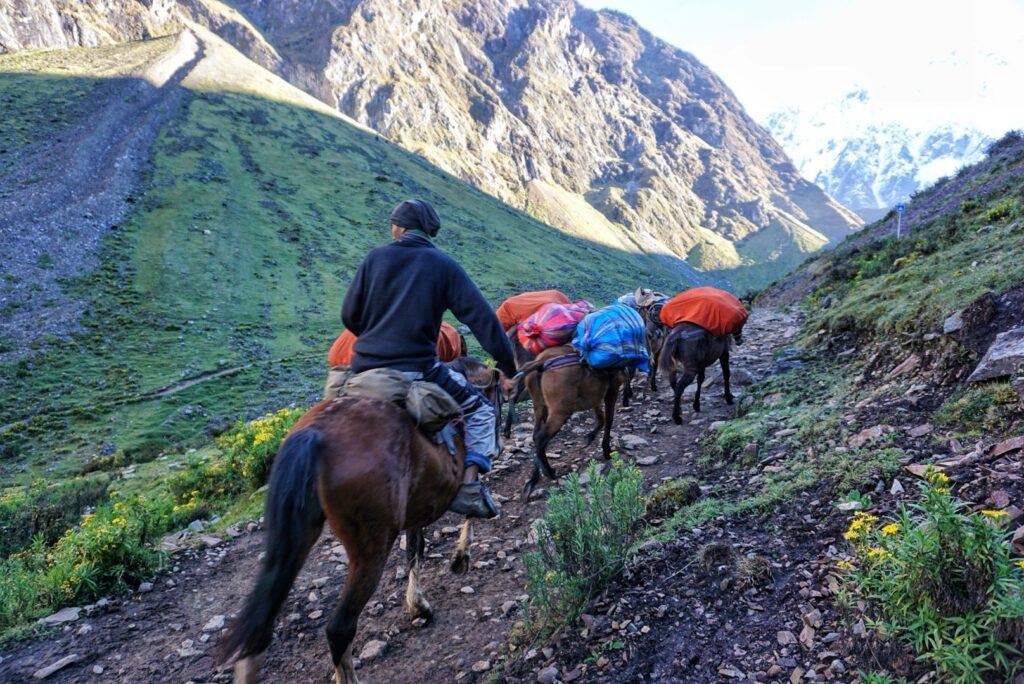
From my experience with Salkantay Trekking, they provided a duffle bag to pack sleeping bag, sleeping mat, clothes, and personal items. The horses carried the duffle bags from camp to camp so I was only responsible for carrying my day bag (a smaller backpack for hiking essentials) such as my camera, hiking poles, water reservoir, snacks, and clothing layers that I might need on the trail.
Packing List for the Salkantay Trek:
- Backpack (with hip straps to help distribute weight off the shoulders)
Hiking boots and sandals for camp
Wool hiking socks
Puffer/down jacket
Rain jacket or poncho
Long sleeve base layer shirt (sweat wicking)
Hiking pants and/or leggings for layering
Hat, polarized sunglasses, and SPF for sun protection
Beanie and gloves for cold weather
Hiking poles
Reusable water bottle or water reservoir
Insect repellant
Cash (to tip the guide and horseman) and passport
Power bank to charge devices
Microfiber lightweight towel
Headlamp
Wet wipes and hand sanitizer
Electrolytes to add to water
- Toiletries & medicine you might need (Ibuprofen!)
- Camera
The Route: Salkantay Trek to Machu Picchu
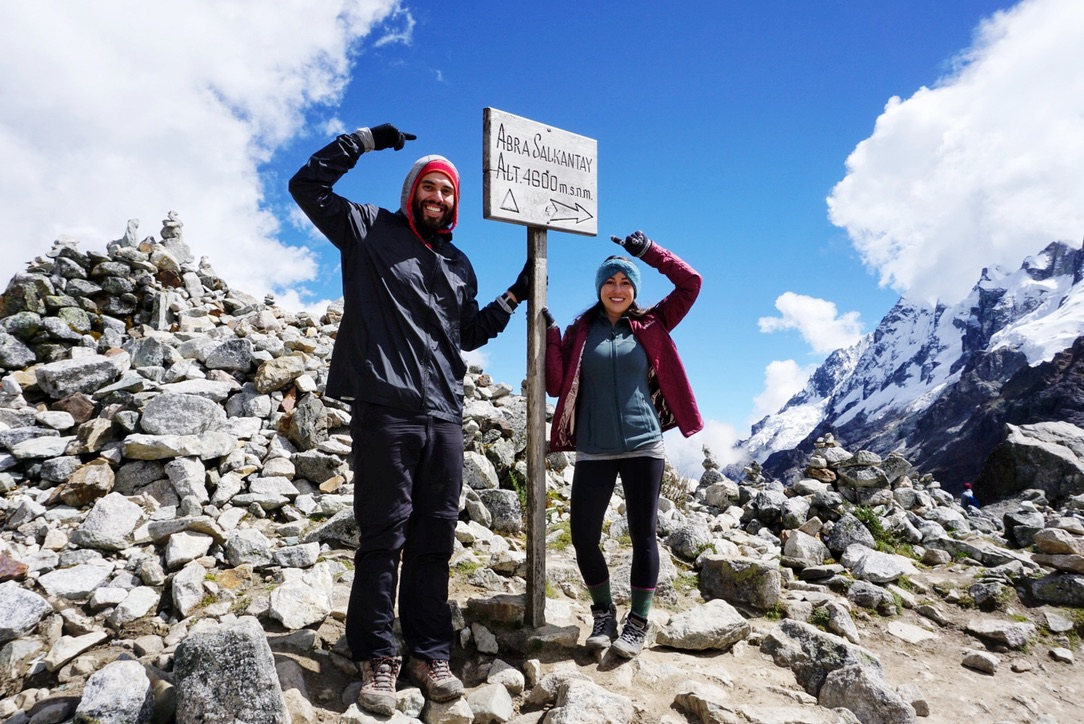
The day-by-day breakdown of the Salkantay trek may vary between different tour operators or if you are hiking without a tour guide. This is a general outline of the trek; details such as daily hiking distance, itinerary, and campsites will vary based on your tour operator.
Day 1: Cusco to Mollepata to Camp
The first day of the trek starts with a very early pickup from your hotel in Cusco. The first stop will be approximately 2 hours from Cusco in Mollepata to eat breakfast at a local restaurant. If you are hiking in a group, this is your first opportunity to meet and mingle with the other hikers and your guide.
Next, you will be dropped off at the trailhead in Challacancha. This is where you will organize your gear with the horseman and the guide will begin to prep the group for the hike. There was a toilet available here, but it was a very long line so I recommend using the toilet facilities at the restaurant prior if possible.
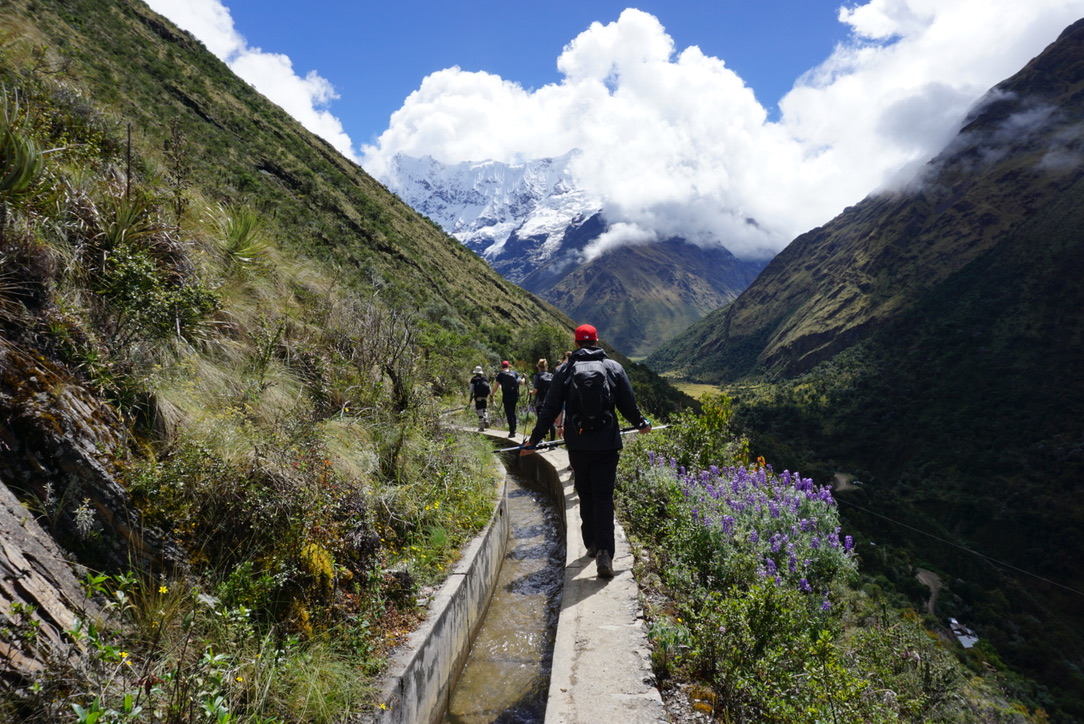
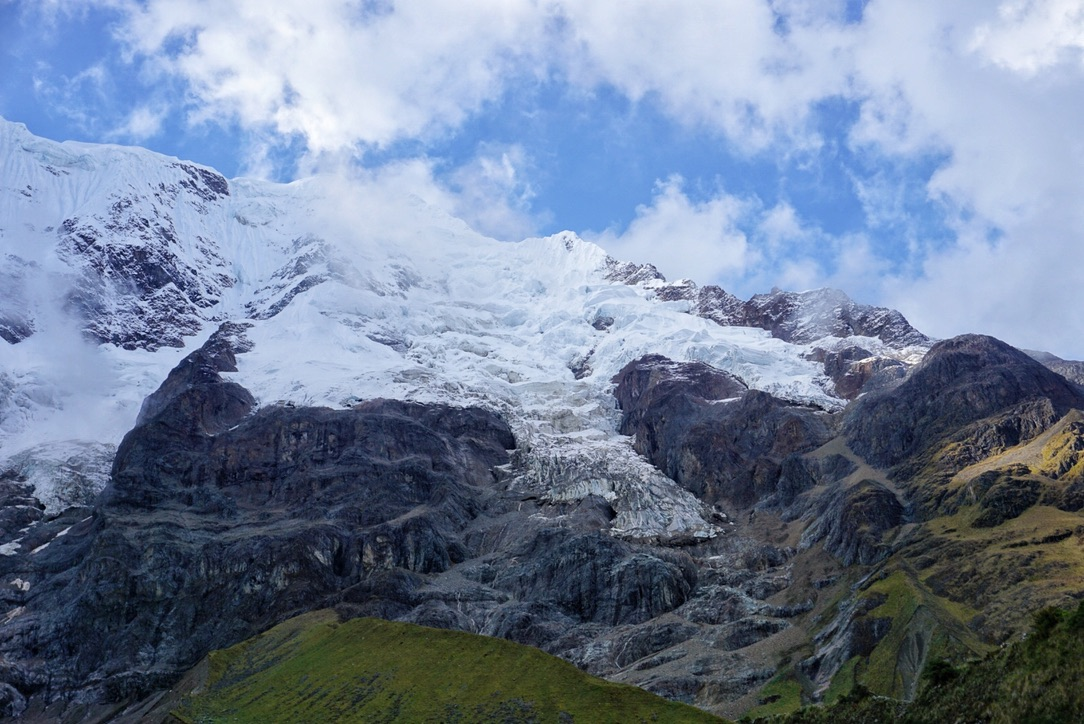
Our guide provided coca leaves to the group at the start of the hike to boost energy and to help alleviate altitude sickness and then we hit the trail. The hike begins gradually uphill and along the restored Inca aqueducts. If it’s a clear day, you will be able to see the looming Salkantay mountain off in the distance as you make your way towards camp.
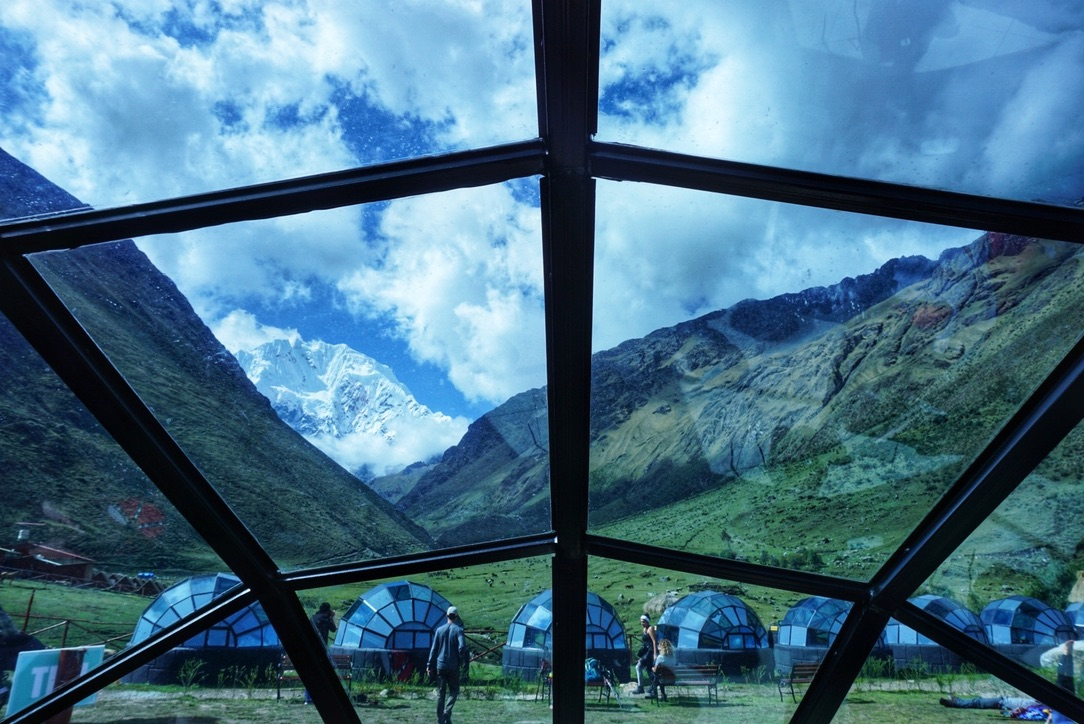
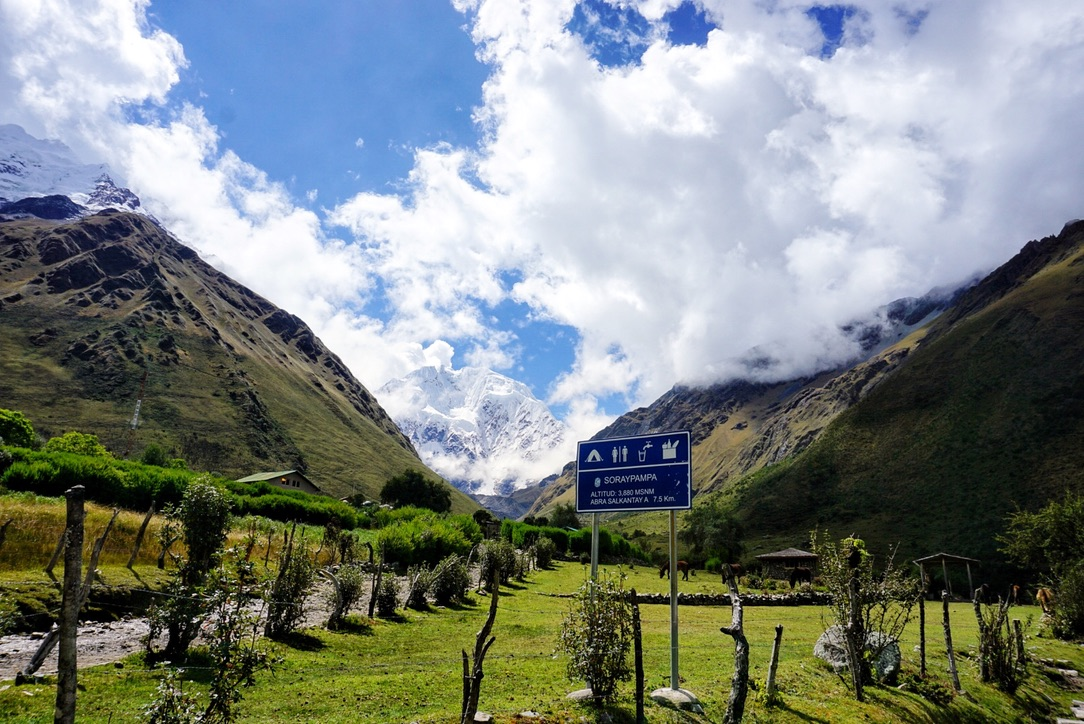
I must brag on the Salkantay Trekking campsite at Soraypampa. The beautiful sky domes may have skimmed on privacy, but made up for it at night with views of the starry sky and the Salkantay mountain seemingly glowing in the distance. This was my favorite campsite, although the coldest and at the highest altitude, 12,861 feet.
laguna Humantay
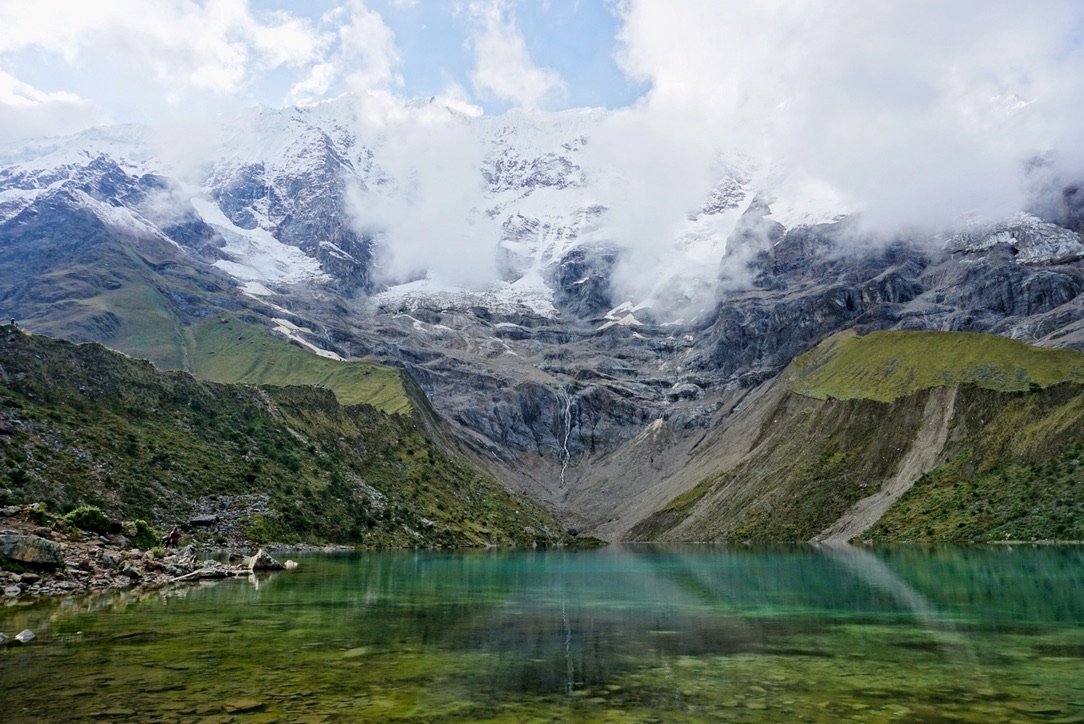
Upon arriving at camp, we quickly settled into our sky domes and dropped off any unnecessary items prior to starting the ascent to Laguna Humantay.
The trail was very short and steep from our camp. Due to the high altitude, we moved at a slow pace and took frequent breaks. The trail itself is not difficult, but due to altitude it feels like a slog.
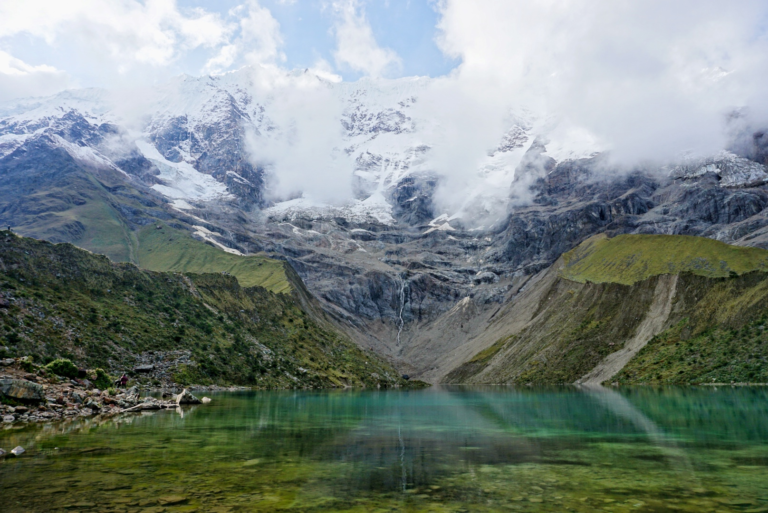
The temporary shortness of breath will be worth it. The turquoise water of Laguna Humantay is stunning! To top it off, the lake is surrounded by snow capped peaks.
There is plenty of room to spread out and find your own peaceful space to soak up the views. You can hike around either side of the lake for a different view of the landscape as well.
In recent years, Laguna Humantay has gotten increasingly popular. Which means more crowds visiting on a day trip from Cusco besides the Salkantay trekkers. In fact, there are now horses available at the bottom of the trail for a fee to take tourists up to the lake who want to bypass hiking.
After some time at the lake, you will head back down to camp for dinner and rest up for a big upcoming day. Make sure to hydrate with electrolytes to help with the high altitude. This was a tough night for me, I developed a really bad headache from the altitude and multiple other hikers in our group had altitude sickness.
Of note, not all Salkantay Trek itineraries include visiting Laguna Humantay. If this is important to you, please check the tour itinerary prior to booking your trek.
Day 2: Salkantay Pass to Camp
We were gently woken up with a knock on our door by our guide with coca leaf tea to start off the second day of the trek to Machu Picchu. Day 2 is notoriously the most difficult day of the trek and requires an early morning start.
While it was still dark outside we packed up our duffle bags for the horseman to load up, ate breakfast with our group, and hit the trail right as the sun was beginning to rise over the mountains.
The salkantay pass
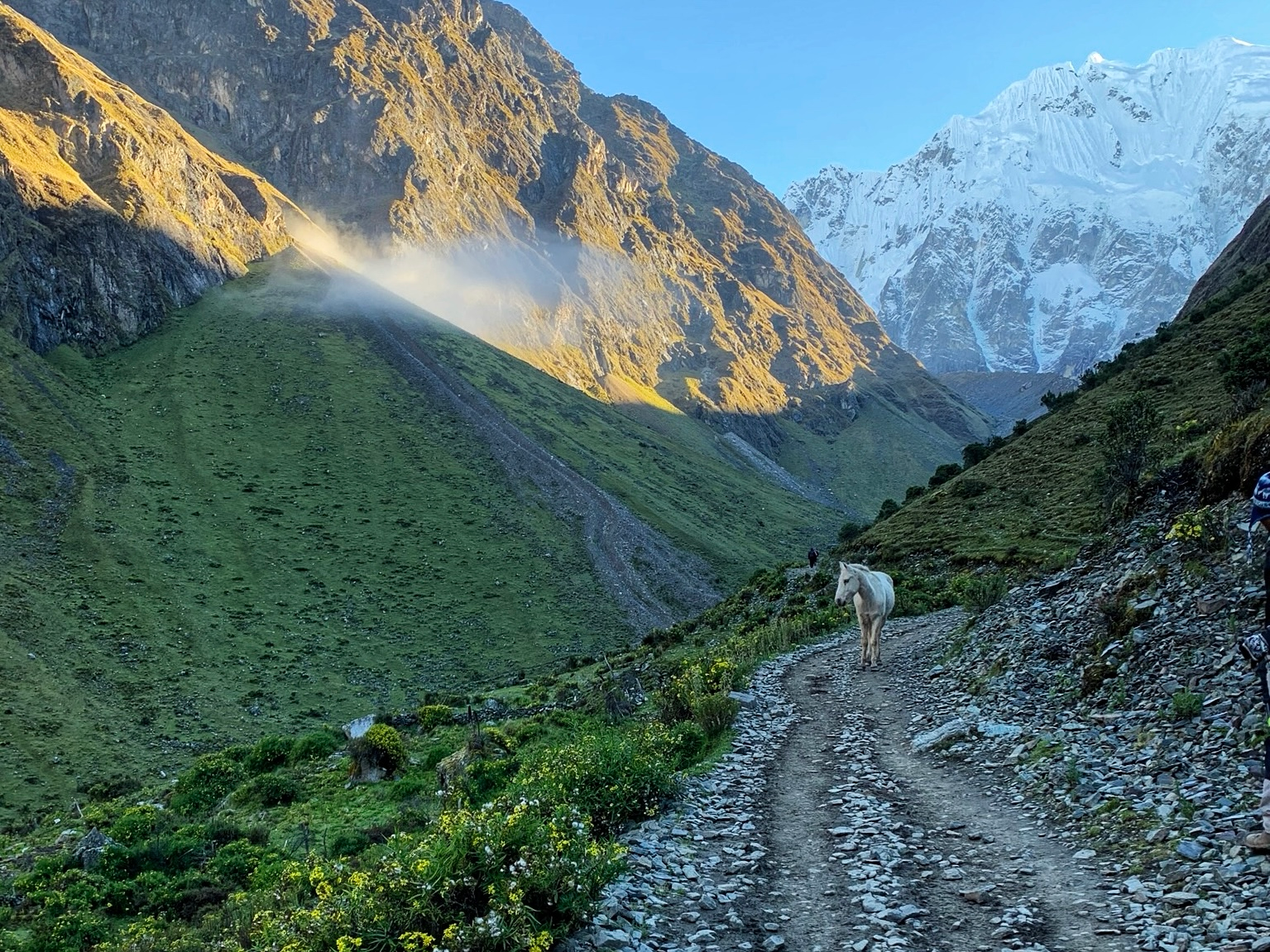
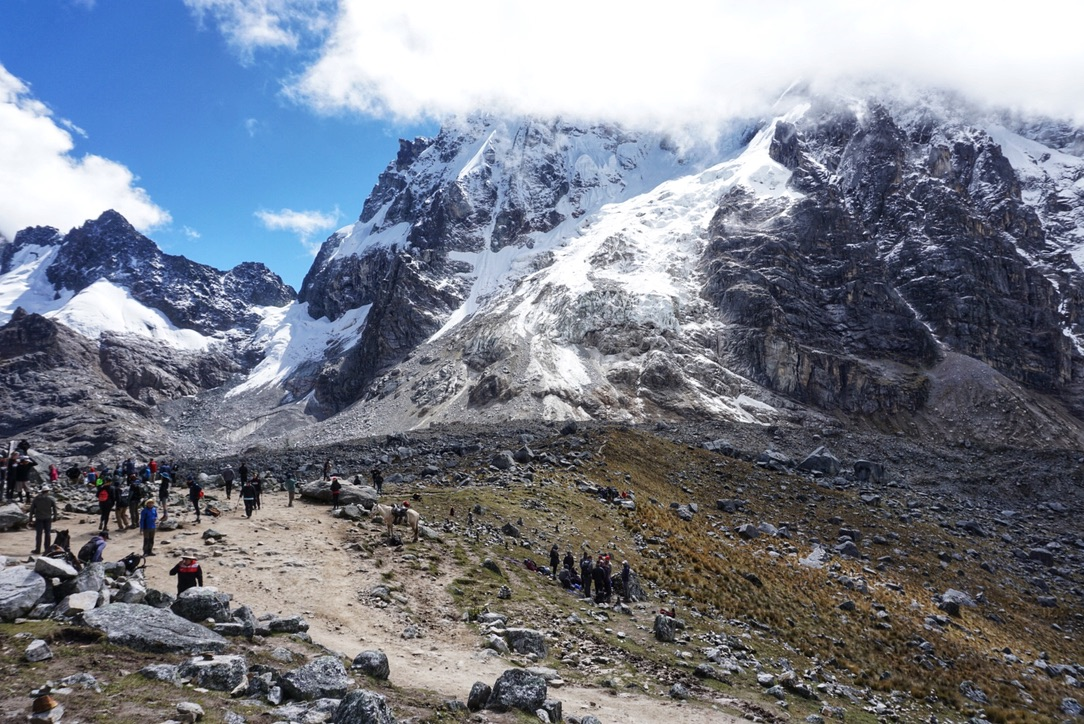
The main objective for the day is to hike to the highest point of the trek, the Salkantay pass at 15,091 feet and then descend down to the next campsite.
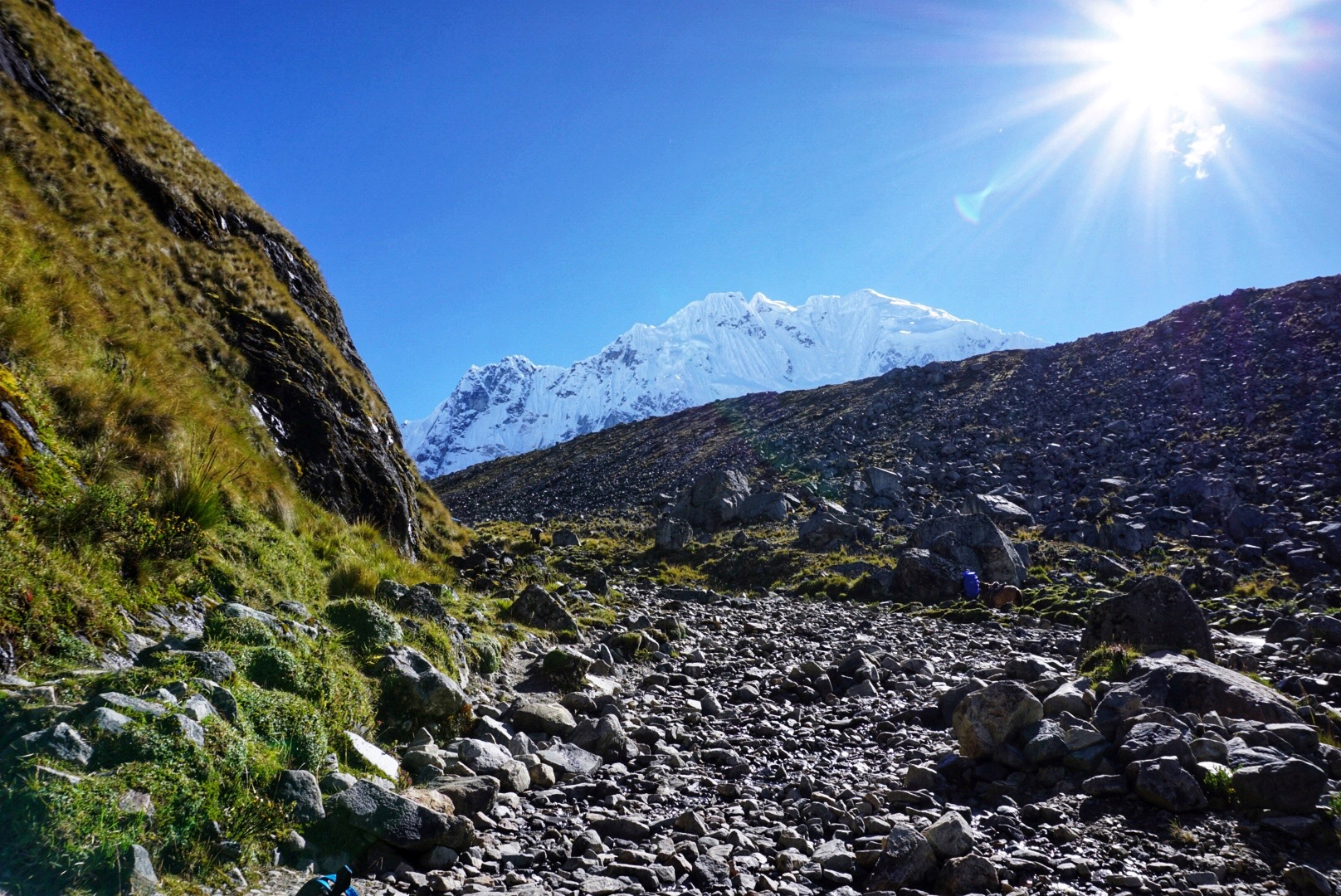
The trail immediately starts going uphill through a valley like area with rugged landscapes on both sides of the trail. The trail is rocky and will test your endurance as you continue to ascend into higher altitude.
You will be close to the top when you reach the switchbacks known as the “seven snakes.” It takes approximately 3 hours to reach the Salkantay pass where you will be almost eye level with the surrounding mountain peaks.
On a clear day you will have great photo opportunities with towering mountains in the background. After celebratory photos and admiring the view it will be time to change gears and begin the downhill portion of the hike.
fyi
There is an option for weary hikers to take a horse from the Soraypampa camp area to the top of the pass for a fee. If you are having issues with the altitude, this is an option to help you continue with the hike. In my tour group, 2 hikers utilized this service and were able to reunite with the group and continue with the hike at the top of the Salkantay pass.
From mountain to lush jungle
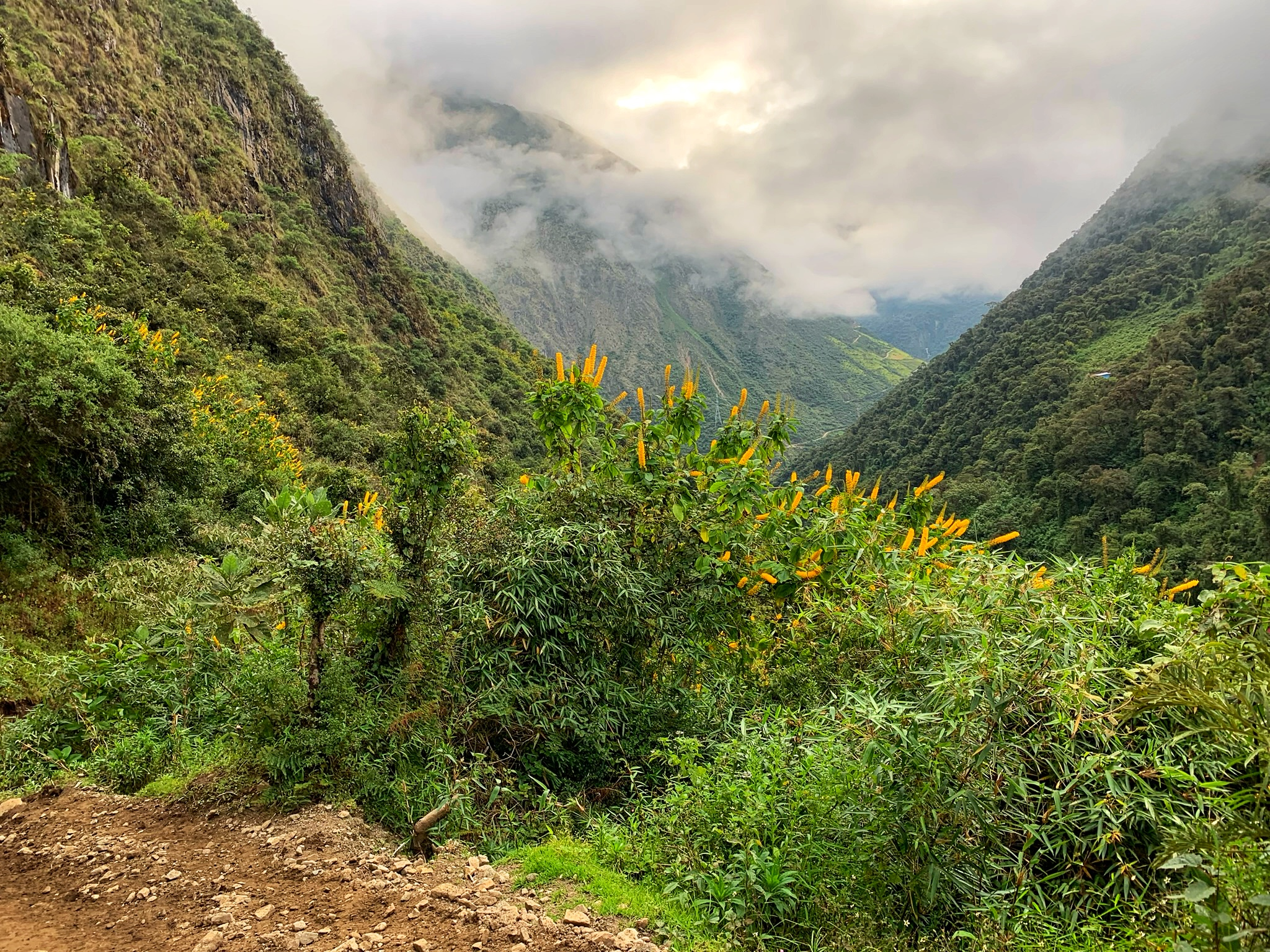
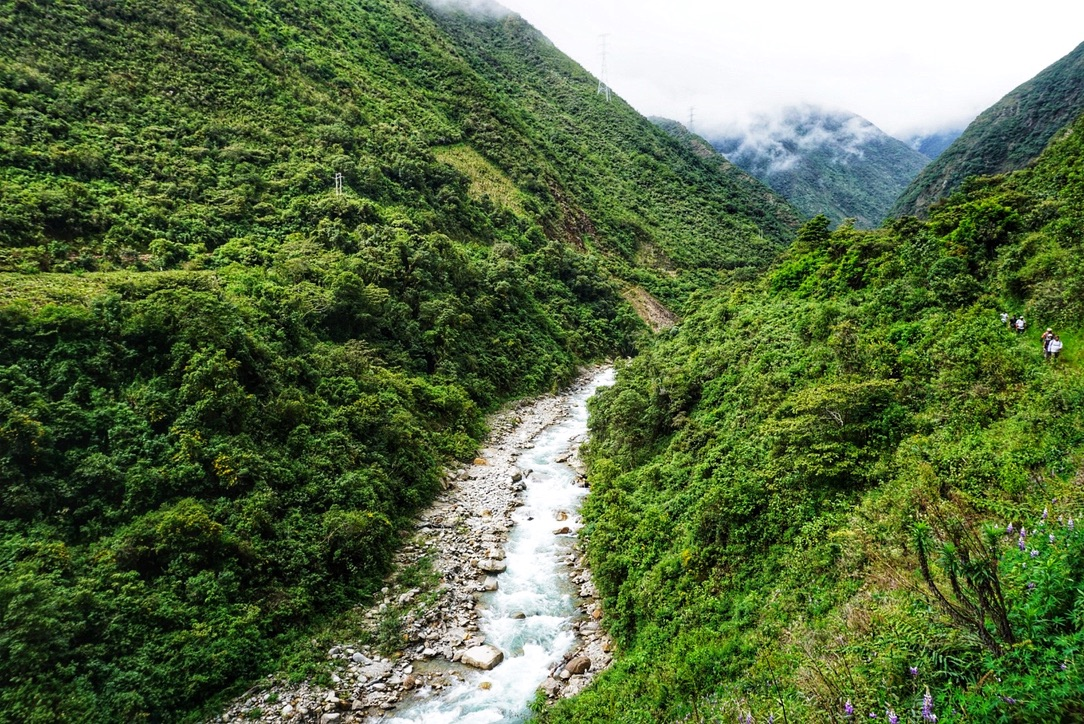
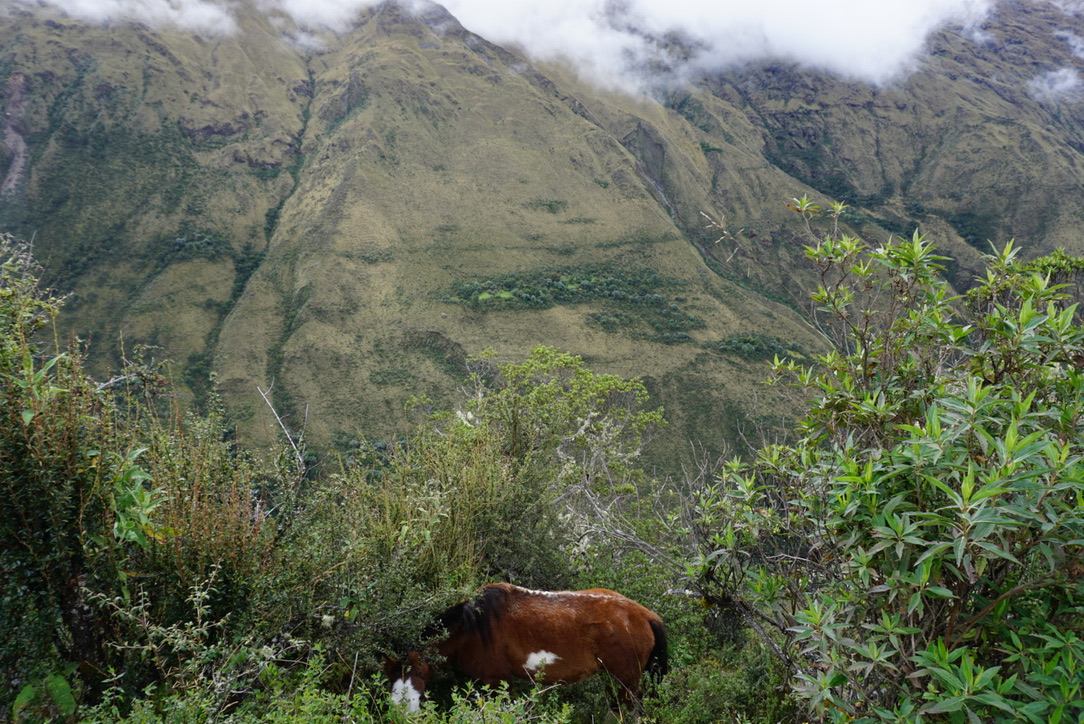
As the trail descends, the landscape will change from rocky to lush jungle as you enter into the area known as the cloud forest. Breathing will start to become easier as you make your way down to lower elevation. You might even find yourself taking off a layer of clothing as the climate becomes a little more humid.
Day 3: Through the Santa Teresa Valley to La Playa/Lucmabamba
Day 3 of the Salkantay Trek is generally considered an easier day. The trail continues alongside a river with jungle views and waterfalls along the way. The trail is mostly flat through the Santa Teresa Valley, home of avocado, banana, and coffee farms.
Most of the tours stop at a local coffee farm for lunch and a brief tour of the coffee farm. There are some natural hot springs in the area, check with your tour guide to see if they are included in the itinerary.
Day 4: Final Hiking Day to Aguas Calientes
The final day of trekking will continue to build excitement leading up to Machu Picchu. Today consists of an uphill hike to visit the Inca ruins of Llactapata and will give you a first glance at Machu Picchu in the distance.
The final leg of the hike to Aguas Calientes is either a train ride or a long walk along the train tracks. I found this portion of the trail to be the most tedious. It took approximately 2-3 hours of walking along the train tracks to reach Aguas Calientes. At this point, I was tired and there were no views. However, knowing it is the final stretch will help keep you motivated.
Aguas calientes
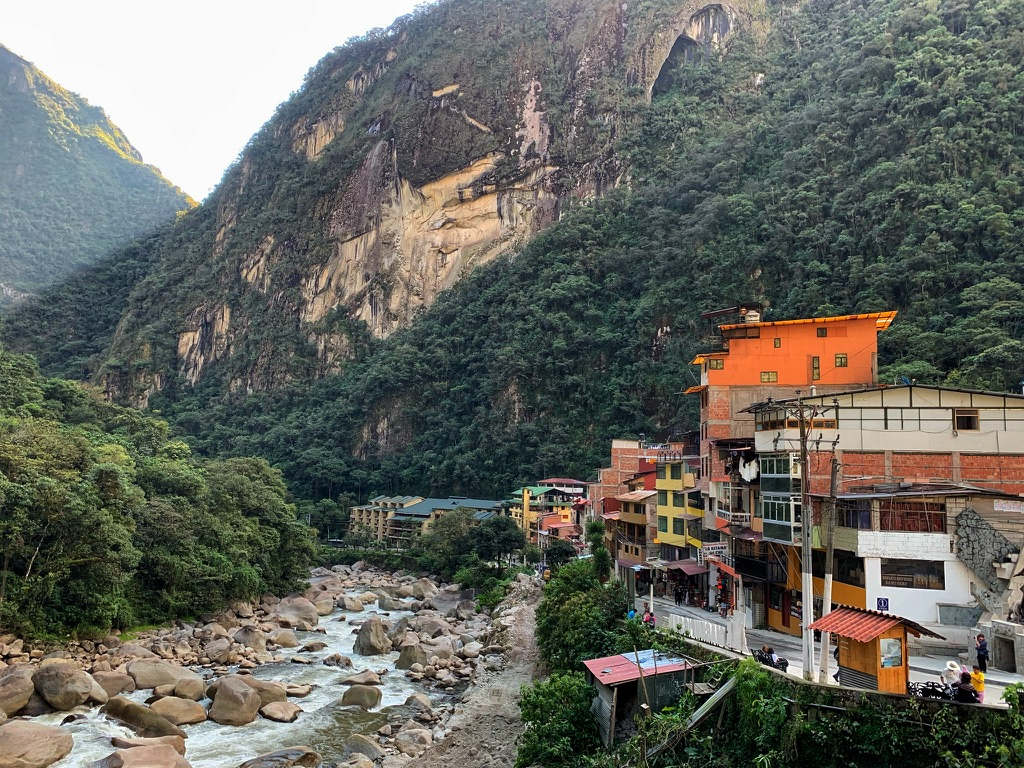
The train tracks will take you directly into the small town of Aguas Calientes, which sits at the base of Machu Picchu mountain. The town is a hub for tourists visiting Machu Picchu. The little mountain town has all the amenities travelers need; restaurants, hotels, hot springs, shops, and the bus & train stations. After camping for several nights on the trail, a hot shower and sleeping in a hotel will feel so luxurious!
On our final night before Machu Picchu we enjoyed dinner with our crew and afterwards we wandered around Aguas Calientes. We browsed souvenirs and found a cafe for a well deserved sweet treat.
Day 5: Tour Machu Picchu and Return to Cusco
The four day trek to Machu Picchu culminates into the the final day exploring the ancient Inca citadel! All of the aches and pains from the journey will dissipate once you walk into the ancient ruins and feel the energy of the site.
A guided tour through the Inca site will take approximately 2 hours. The tour will take you through the highlights of the ruins and you can learn about Machu Picchu’s intriguing history.
There is an option to hike Huayna Picchu mountain or Machu Picchu mountain as part of the tour, however this requires you to book specific tickets in advance. After the guided tour, our guide went with those who chose to do the additional hike and we split off from the group which allowed us to spend time exploring on our own.
After completing the tour and making your way back down to Aguas Calientes it will be time to round up your luggage from the hotel and begin the bittersweet trip back to Cusco.
Travel plans may differ between tour companies, but most people will board the train in Aguas Calientes and take the 2 hour trip to Ollantaytambo in the Sacred Valley. From here, you will take a bus for another 1.5-2 hours to Cusco, signifying the end of an amazing experience.
Accommodation and Facilities
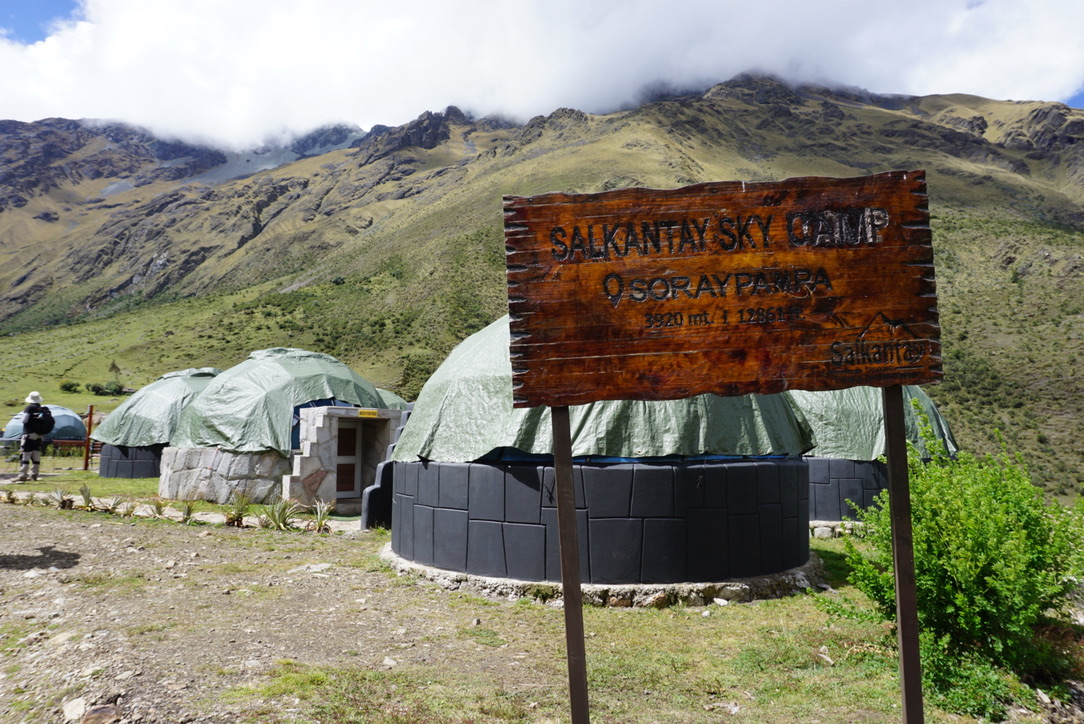
Overall, the facilities and accommodations on the trail are quite impressive. You will not be roughing it on the Salkantay trek. In my experience, each campsite offered water, bathroom facilities, and comfortable sleeping accommodations.
The most impressive part of the tour package is the food. The chefs deserve a standing ovation for not only hiking the entire trek, but also making it to camp before the group to setup and prepare hot and delicious meals to fuel hungry hikers. I was so impressed and grateful to have wonderful chefs taking care of us on the trek.
Accommodations will vary between tour companies and even standard vs luxury packages.
What to Expect on the Salkantay Trek to Machu Picchu
Be Prepared for High Altitude
The altitude is a huge factor on this trek. Hiking in high altitude requires extra precautions to prevent altitude sickness. Here are a few recommendations to help with altitude sickness:
Acclimate in Cusco for several days prior to starting the trek
Stay hydrated and add electrolytes to your water
Take breaks and pace yourself, slow and steady wins the race
Practice good breathing techniques such as nasal breathing instead of rapid shallow breathes through your mouth
Drink coca leaf tea or keep coca leaves in your mouth to help alleviate symptoms of altitude sickness
As a healthcare worker, I came prepared. I brought a pulse oximeter on the trek to monitor my oxygen saturation and I had the prescription medicine Diamox, which is a diuretic. It made my hands and feet feel tingly and I had to urinate often which was annoying. Even with the medication, I had a pounding headache during the first day of the trek, but luckily I did not get sick.
Be Prepared for Weather Changes
The weather varies throughout the trek due to changing altitude and climates. The best way to stay comfortable in all conditions is to dress in layers.
Most importantly, always be prepared for rain. I recommend a rain cover for your backpack and a good rain jacket or poncho. The last thing you want is to get your gear and clothing wet. It is an extremely uncomfortable experience that can be prevented by being prepared.
Hiking with a Group
Hiking in a group is a great opportunity to make friends from all over the world! Generally, I find fellow hikers to be like minded and good company. After a few days on the trail together you will bond and form a tight knit “trail family.”
However, when hiking in a group you do have to keep up the pace. If you are a slow hiker or like to stop frequently for photography (like me 🙋🏽♀️) you might find yourself falling behind the group. Overall, it doesn’t hinder the hike, it is just something to be aware of. Our guide did a good job of planning brief but frequent stops to regroup and keep everyone together.
The shared experience, the slog, the accomplishment, and everything in between is a great way to form friendships. Be sure to enjoy a pisco sour cocktail to celebrate completing the trek to Machu Picchu with your hiking crew on your final night together in Aguas Calientes.
Environmental Considerations
Leave No Trace
The quickest way to ruin the hiking trail for others is to leave trash, that includes toilet paper! There’s nothing worse than admiring the incredible scenery and then seeing someone’s used toilet paper. Be respectful of nature and fellow hikers by packing out everything you brought.
For toilet paper and wipes; carry an extra ziplock bag or be resourceful and use something like a Pringles container with a lid to contain your dirty wipes and then dispose when you find a trash can or at the end of the hike.
Also, staying on the designated trail reduces the impact to the surrounding vegetation and reduces trail widening and erosion. Being mindful of your impact will help keep the trail in ideal condition.
Machu Picchu
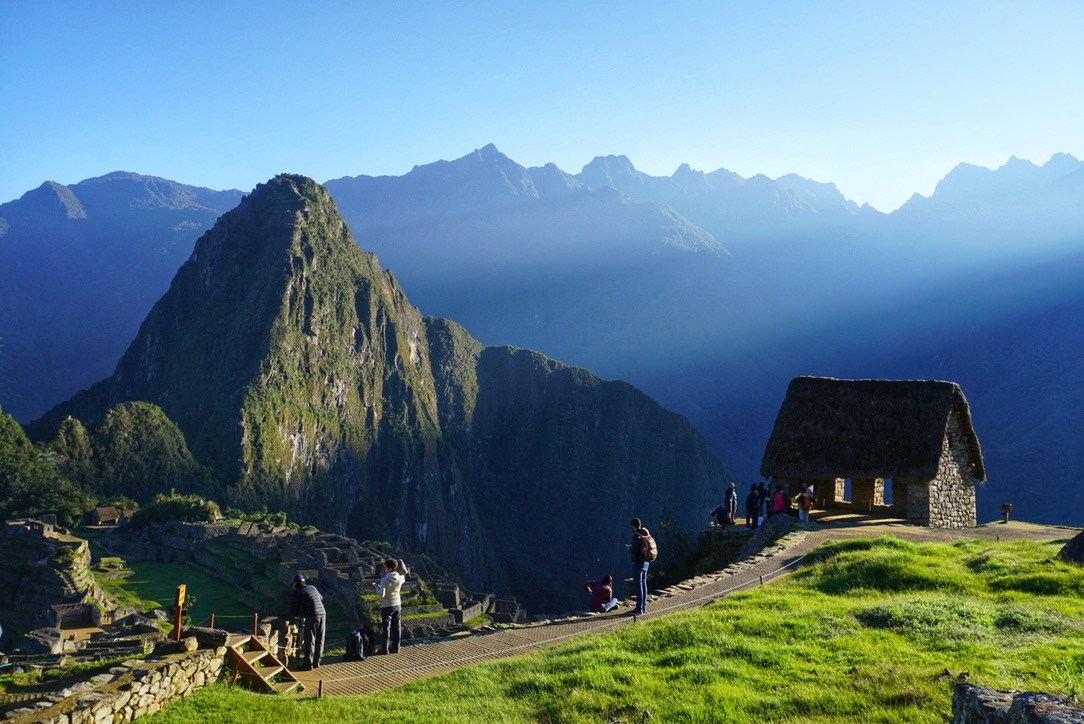
Completing a multi day hike to Machu Picchu will make the experience more visceral through a challenging physical endeavor. I loved being absorbed into the process through nature and having the goal of reaching Machu Picchu. You will really feel accomplished when you complete the trek!
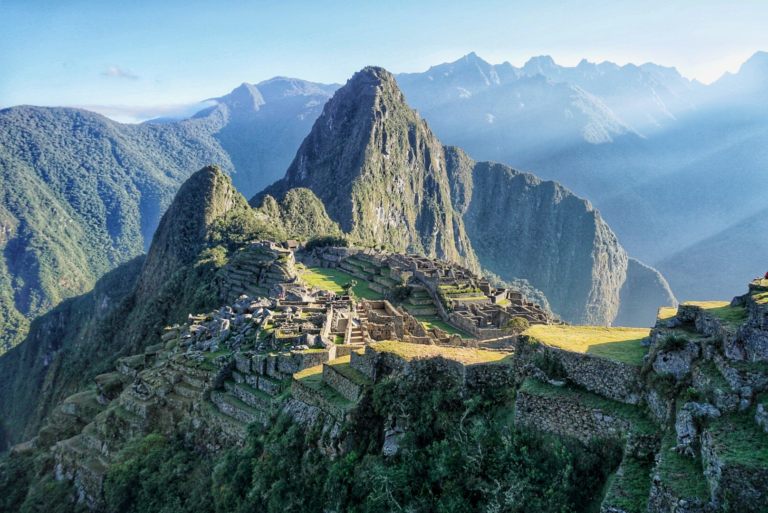
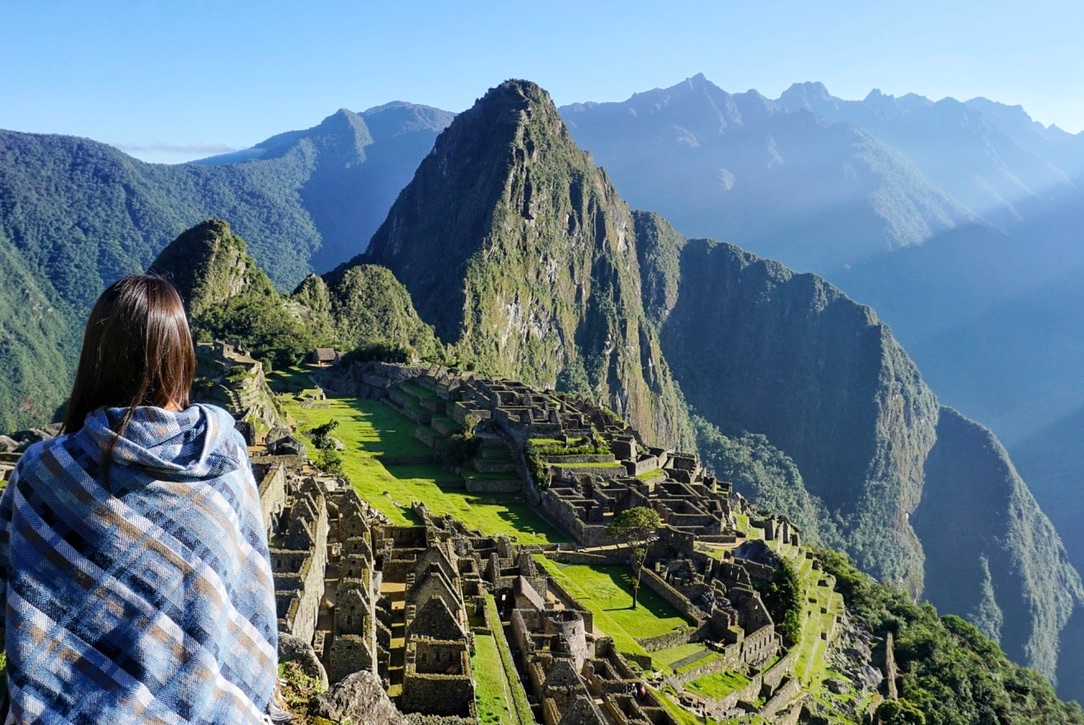
While touring Machu Picchu you will learn about Inca culture, history, architecture, and innovation that brought this ancient city to life.
A few points of interest of the tour include the Watchman’s Hut, Temple of the Sun, Temple of the Three Windows, Temple of the Condor, Intihuatana Rock, Sacred Rock, Royal Tomb, Inca Bridge, and the Sacred Plaza. Also, the agricultural terraces built straight into the cliffside are very impressive as well. Make sure you take a moment to admire the surrounding Andes mountains, the entire setting is incredibly beautiful.
Additional Recommendations
Prevent Sore Toes
This is random, but important – trim your toe nails before the hike! Doing so will prevent them from rubbing against your boots during the descent which causes irritation. Sore toenails are the worst while hiking.
Tour Company Recommendation
There are plenty of tour agencies in Cusco that provide trekking services to Machu Picchu. You can find varying lengths and different itinerary options to best suite your needs.
I booked with Salkantay Trekking and had an amazing experience. I can confidently recommend this company if you are considering the Salkantay Trek to Machu Picchu.
Recovery Week in Cusco
After such a large physical effort, we decided to spend a week in Cusco basking in our awe and recovering after the trek. It’s the perfect place to indulge in delicious food, unwind, and wash your post hike laundry. If you plan to spend time in Cusco as well, check out my blog post about the 10 Best Things to Do in Cusco.
The Salkantay Trek to Machu Picchu offers a different experience and perspective than the Inca Trail. I loved being immersed in Peru’s landscapes en route to Machu Picchu. Ultimately, a trek to Machu Picchu goes beyond the ordinary and will remind you that the journey is just as important as the destination.
Save & Share📍